Paris Field Notes: Expanding the block
The real area around the Palais Garnier already carries enormous theatrical power. It has scale, elegance, commerce, spectacle, and history. But fiction allows a different kind of truth. I did not want to reproduce the district as a museum model. I wanted to build a version that could hold the pressure of the story.
So I expanded the block.
Not outward as much as inward.
More rooms. More thresholds. More private corridors. More businesses tucked behind businesses. More people living above the action. More hidden movement between places. More chances for a character to be seen, missed, followed, overheard, or misread.
That density supports the story’s central tension: in Olympia, everyone is close to everyone else, but no one sees the whole machine.
La Fleur Bleue may sit near the theater. Le Den du Turk may be only a few doors away. Les Bacchantes may look ordinary from the street. Le Club Aéronautique may appear respectable. The Artifactairé may be nearly invisible. But together they form a network. Each location has its own rules, its own economy, its own mythology, and its own relationship to power.
This is how cities actually work.
Not as clean zones, but as overlapping jurisdictions.
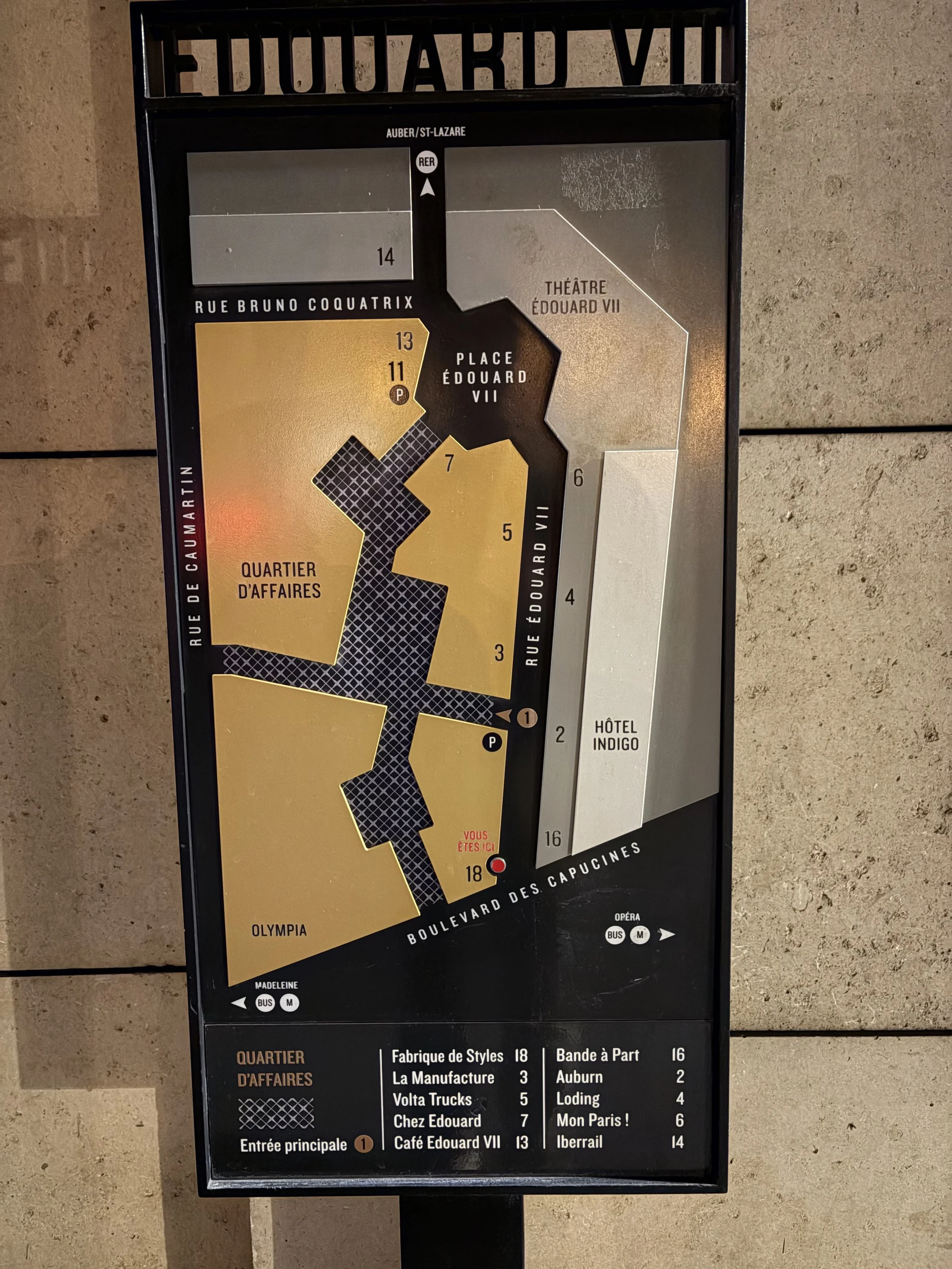
The police have one map.
Criminal syndicates have another.
The wealthy have another.
Workers have another.
Women have another.
Children have another.
Secret societies have another still.
Olympia is what happens when all those maps occupy the same few streets.
