T.K. Jeffreys
Author of Les Boulevardiers: A Belle Époque Story
T.K. Jeffreys writes atmospheric historical fantasy about power, spectacle and survival. His debut novel, Les Boulevardiers: A Belle Époque Story, opens the doors to Olympia, a glittering and dangerous quarter of 1878 Paris where theaters, maisons, private salons and occult societies press against the same narrow streets.
The first spark for Les Boulevardiers came from Degas’s ballet paintings and Little Dancer sculptures.
I kept coming back to the girl inside the pose. The lifted chin. The costume. The discipline. The room that gets to look at her and call it art.
That became Raquel Leroux.
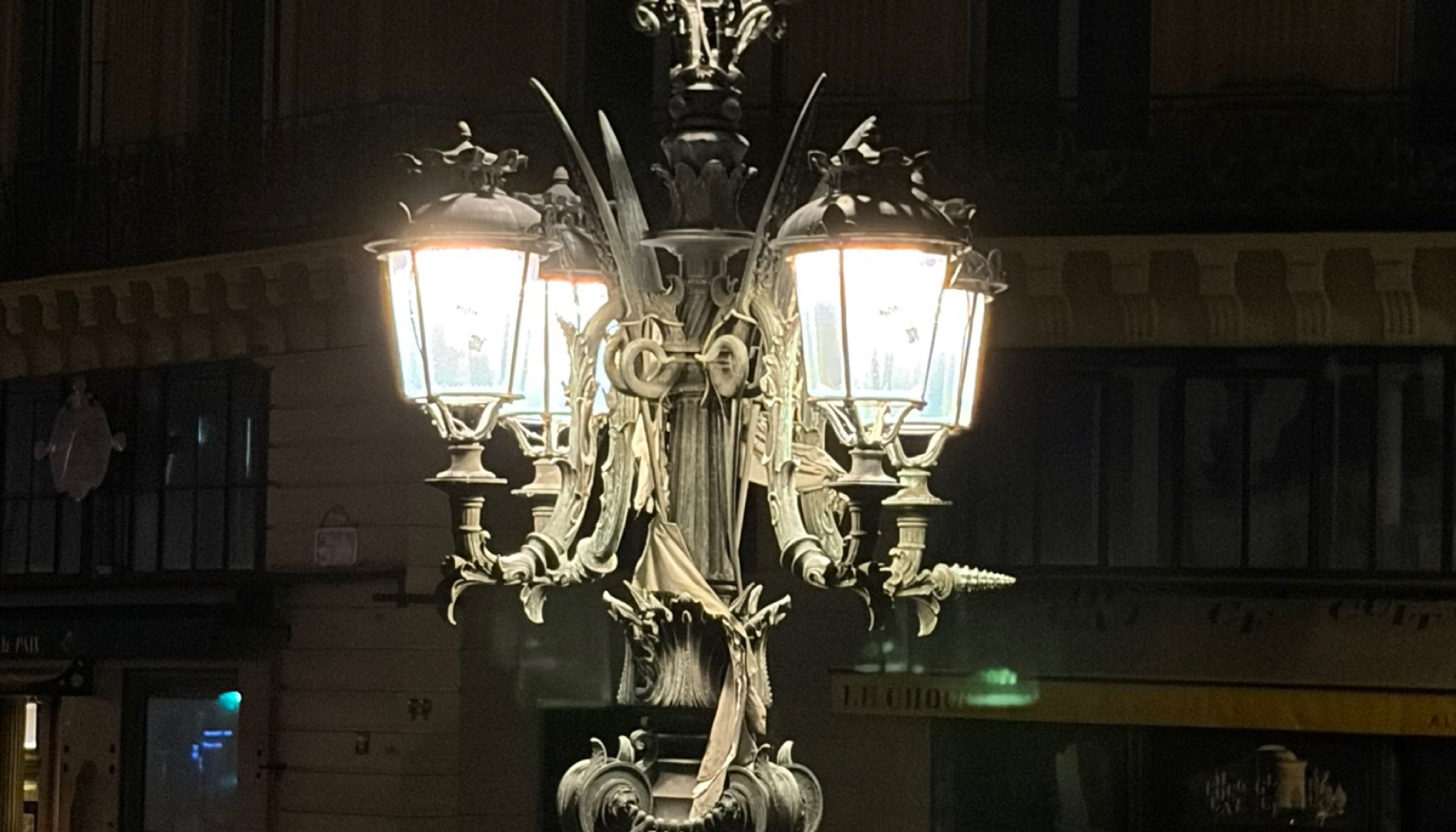
From there, the world widened. Theaters. Maisons. Police files. Private salons. Occult rooms. The glittering streets around the Palais Garnier in 1878. Some places were invented. Some came from research. Some came from walking Paris before dawn and noticing which doors, corners and facades seemed to be keeping secrets.
Les Boulevardiers is not a museum-piece version of the Belle Époque. It is a story about glamour under pressure: who profits from it, who performs it, who survives it and who learns to turn it into power.
Many of the novel’s characters began as fragments of the era: a face in a painting, a vice from a police account, a rumor, a posture, a profession, a role built to trap someone inside it. Others appeared because the streets felt too alive to belong only to invention.
The novel moves through a Paris of dancers, courtesans, patrons, criminals, inspectors, servants, occultists and self-made sovereigns of hidden rooms. Some sell beauty. Some buy access to it. Some police it. Some worship it. Some learn how to weaponize it.
Jeffreys is drawn to people who stand close to the same machinery yet face radically different fates. A dancer can become an ornament, a victim, a witness or a strategist. A patron can be protector, predator, fool or mark. A servant can know more than everyone in the room.
In Olympia, power rarely announces itself honestly.
The internal soundtrack for the work is low, gravelly and cinematic: Tom Waits, Ken Nordine and Lana Del Rey. Inspirations include Nick Cave and Baz Luhrmann for lyric spectacle, Christopher Moore for dark wit, Jim Harrison and Steven Knight for tension, violence and poetry sharpened at the edge.
If the novel has a pulse, it is the rhythm of that era, that city and that dancer’s stare.
Any errors are the author’s.
The wonder belongs to Paris.